折罗
CV


Have you eaten food before?
Any food -- Yes, I mean any.
How does it taste?
Yummm? Ewwww?

Banana Curry Pizza
Group Project
2 Months
Contribution: Insight synthesis | Experience workshop facilitation | Touchpoint/material design | Storytelling
Co-design toolkit
Decentralised design
food design
check Our Toolkit Website ➔
Food is inclusive
Everything Fits
Whether you’re from Alert in Nunavut, Canada, covered in ice and snow,
or Medellín, Colombia, where bananas grow in abundance,
or Istanbul, Türkiye, where mountains and sea meet in a so-called “capital of the world,”or Hong Kong, China, a neon-lit city that never sleeps...
We have all eaten food.
We all have the right to talk about texture, mouthfeel, and taste.This has nothing to do with race, background, language, or life experience.
Food is radically inclusive.
It offers everyone an invisible table.We gather around it:
starting with food, and moving toward everything food brings up.
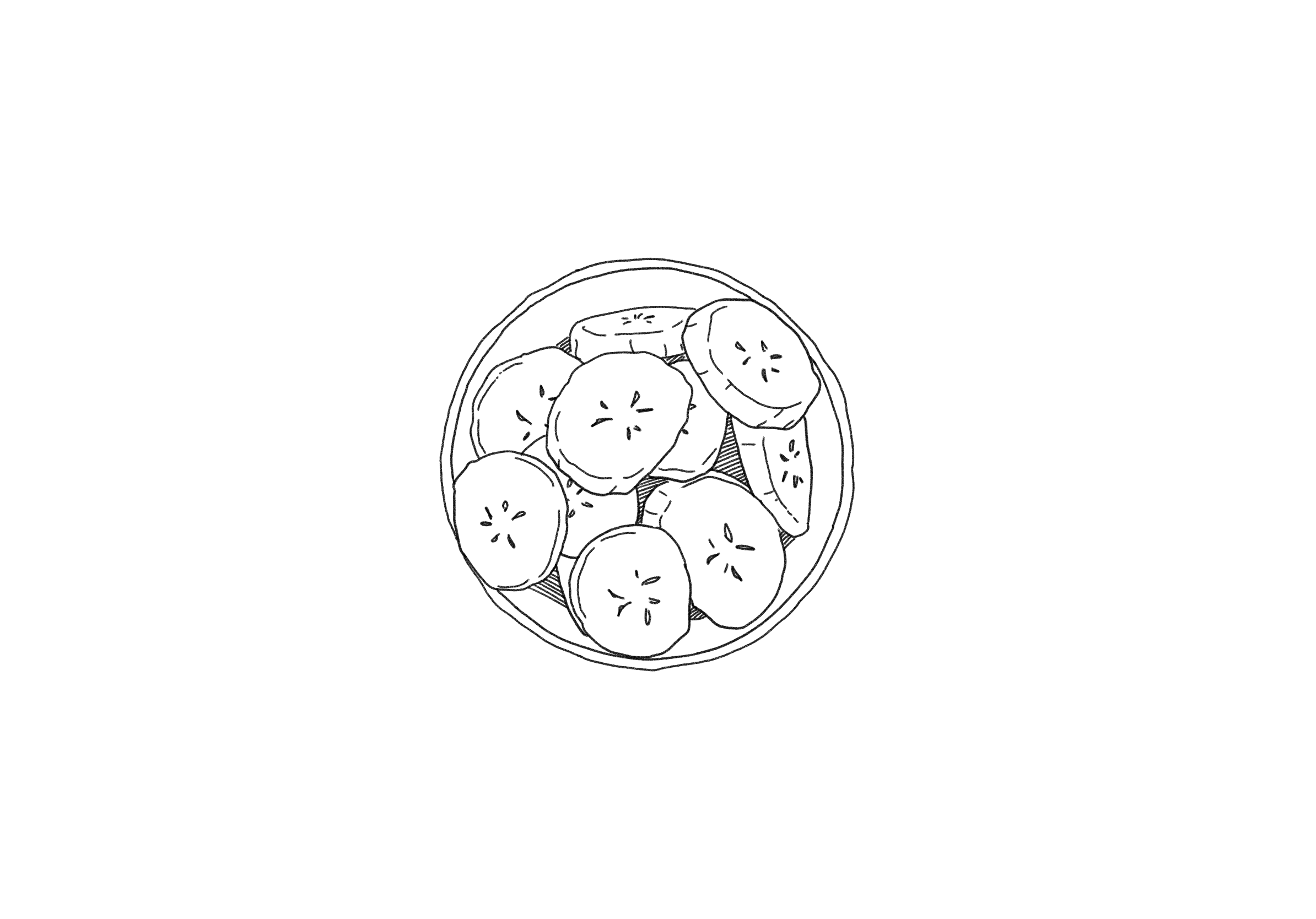
This is not a joke!
A “Joke”
You might think the title is a joke.But it is not.
It is real, and you can find it in many local pizza shops in Sweden.
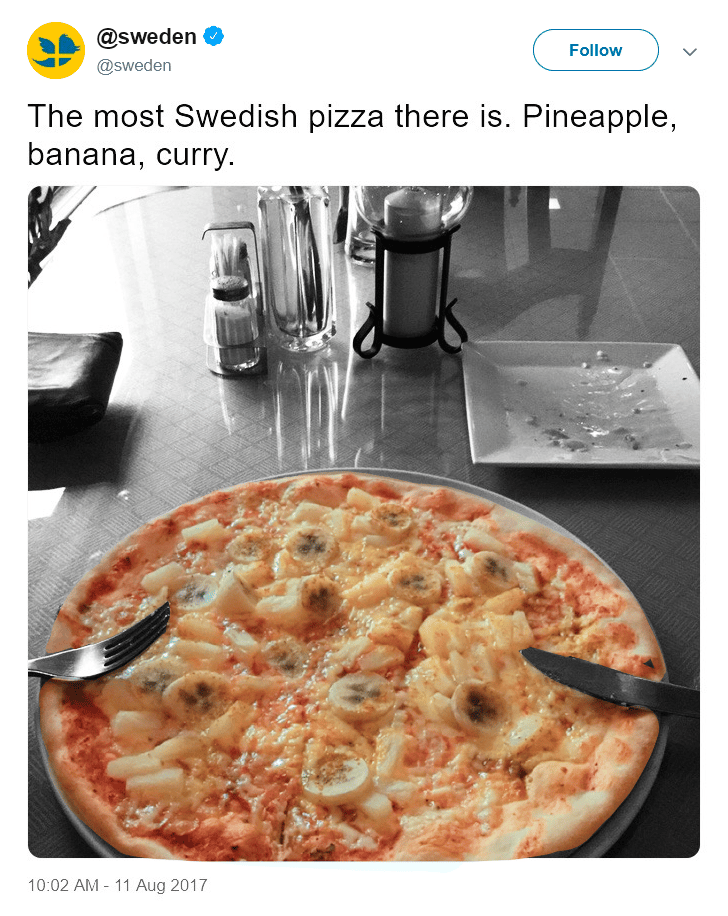
Is this a Pizza Crime? ➔
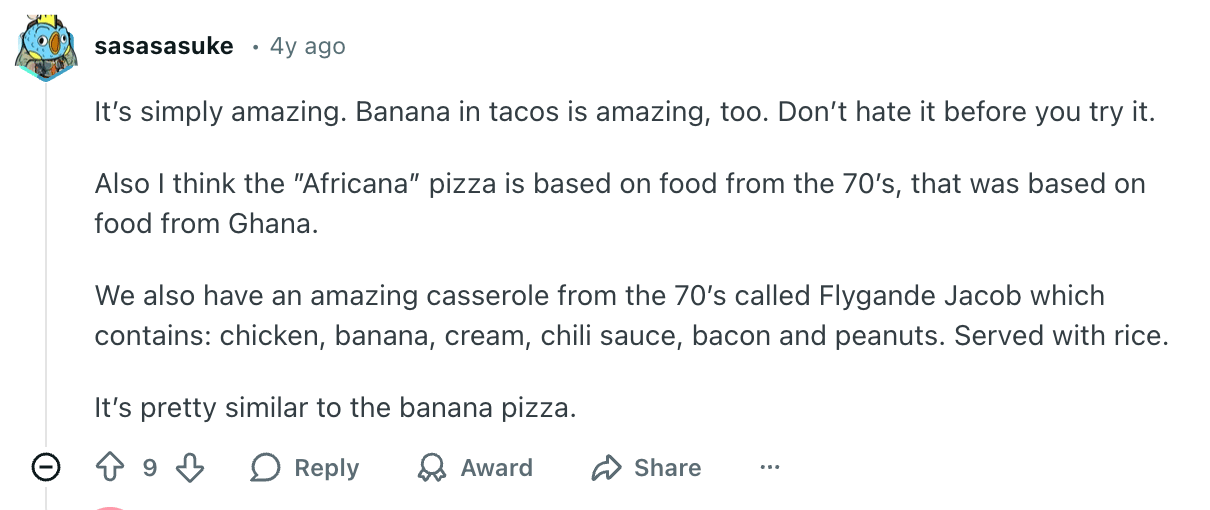
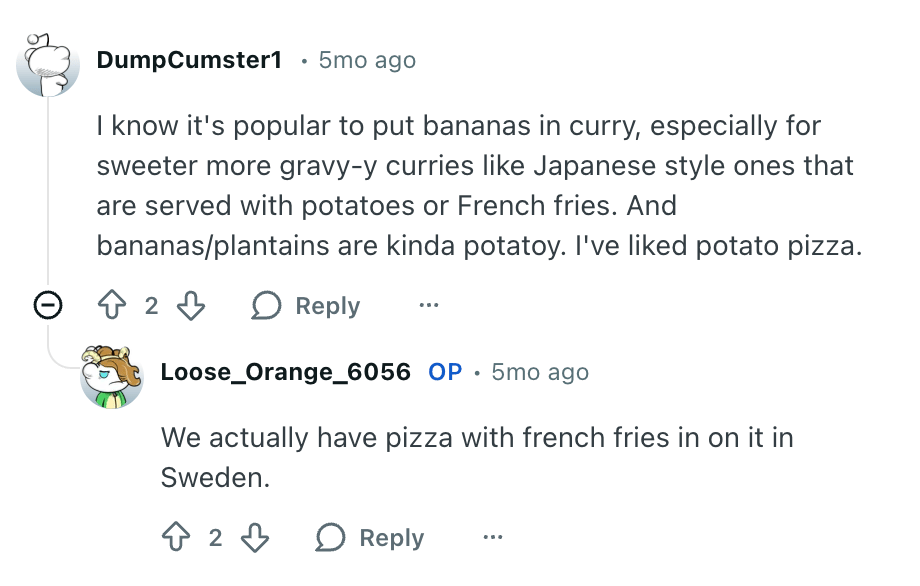
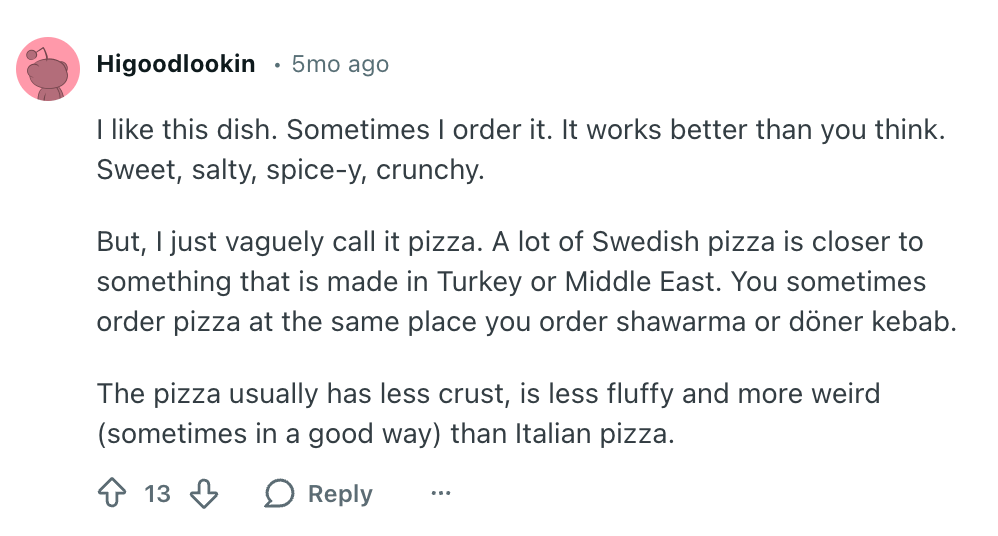
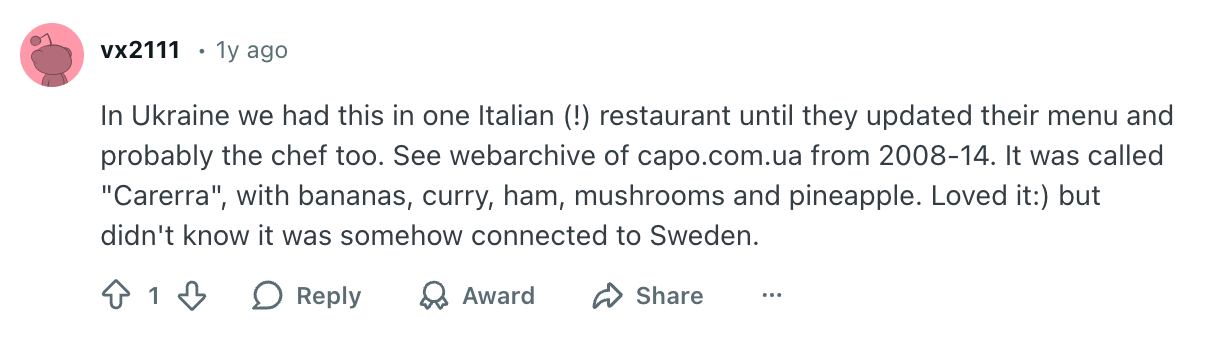
There is no rule in human society that bans bananas or pineapple on pizza.Food naturally allows us to create based on taste, needs, and cultural experience.

low ➔ High

DIVERSITY
Open To Try
Low “Authenticity Policing”
Ann | The Flavour Blender
Wants To Share
Language Barrier
Yvonne | The Shy Food Lovers
Photo Habit
Shareable Moments
Cindy | The Memory Curator
Communal Eating
Compare Habits
Yale | The Food Philosopher
Passionate
Try-New
Brings People Together
Lily | The Culture Explorer
Enjoy Cooking
Emotional Reward
Experience-First
Dacia | The Cook-For-Process Chef
Simple Food
Convenience
Home-Made Explorer
Steve | The Minimalist
Vibe-First
Local-Access
Conversation > Taste
Louis | The Vibe DJ
High Standard
Cautious Recommend
Leana | The Michelin Foodie


Entry 3 | Occasions
Situations turn food into ritual,
the same dish can mean different things
depending on the moment and company.
Entry 2 | Taboos
Boundaries make cultural differences visible.
Entry 1 | Preferences
Preferences are the easiest way in,
people give you concrete details right away.
Back home it’s really hot, so I can handle spicy food pretty well.
Can I dip this in ketchup, or does it have to be basil sauce?
Whenever I’m feeling really down, I’ll make a whole pot of this.


So we asked a design question:
Under this decentered condition with no single correct answer,could cooking itself become a natural ground for inclusive design?And could food be a medium to explore co-design and cross-cultural design in a more concrete way?
Inviting people in
Story Ingredients
Getting people in, and keeping them in
If Food Is A Table
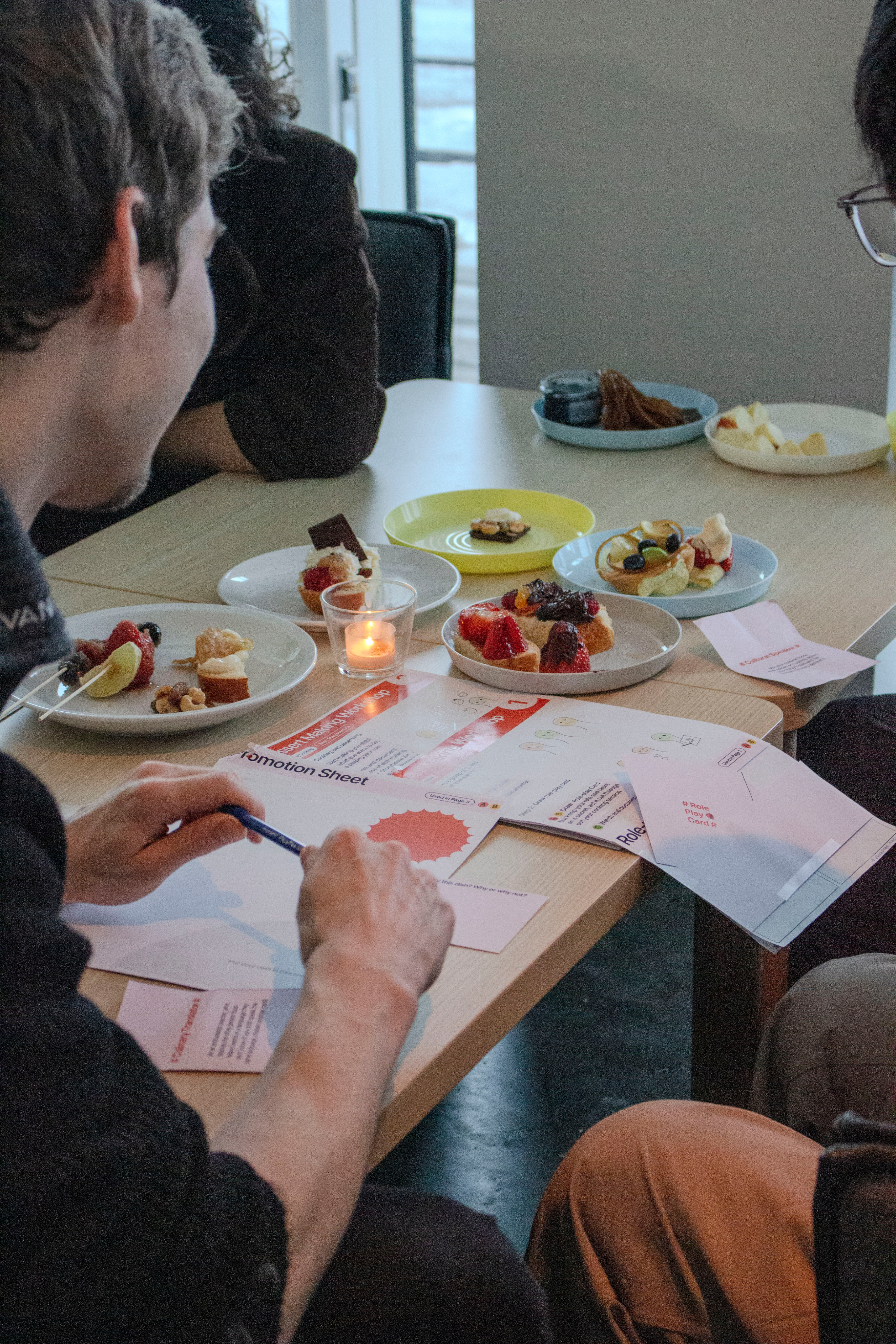
We hosted a food workshop in a rehearsal studio.
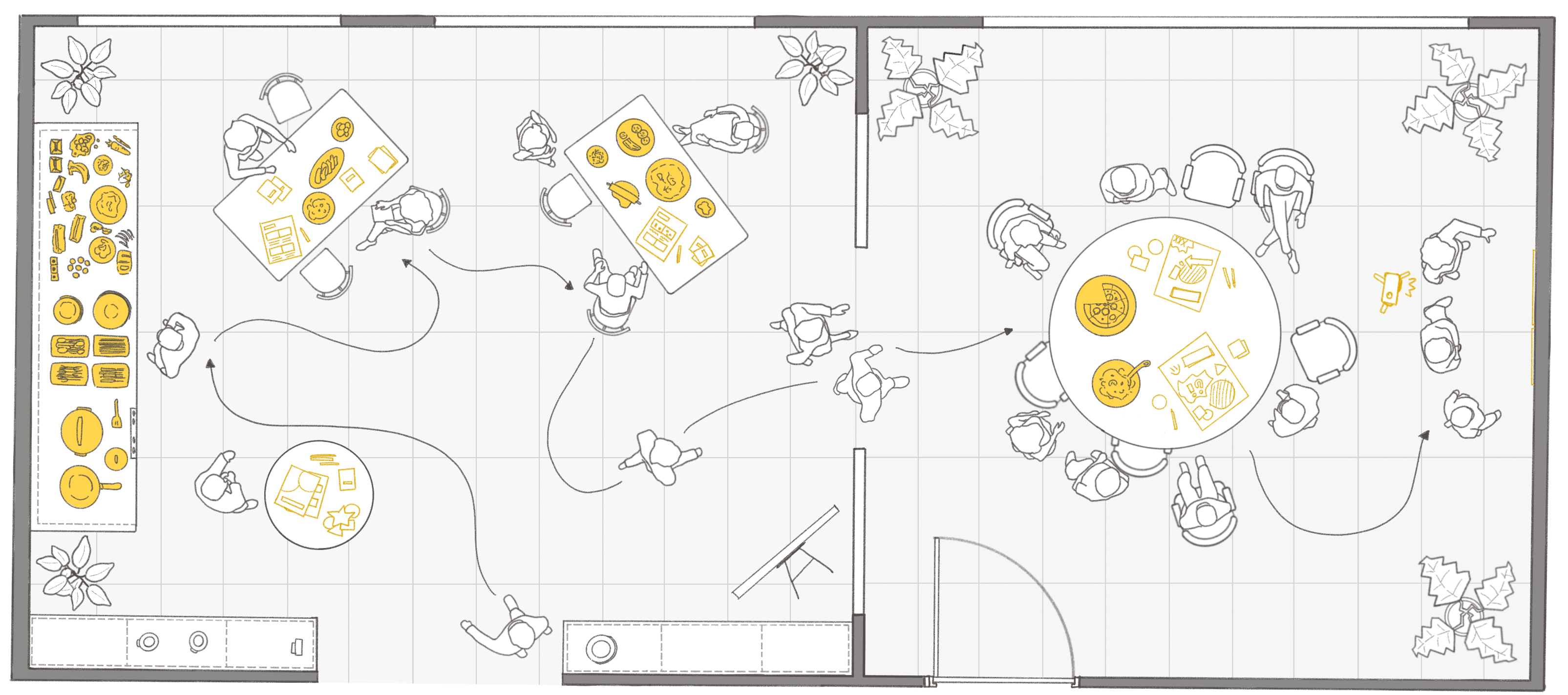
We split “cooking” into 3 unrelated steps (3 teams × 3 people),
then assembled the fragments into one dish.
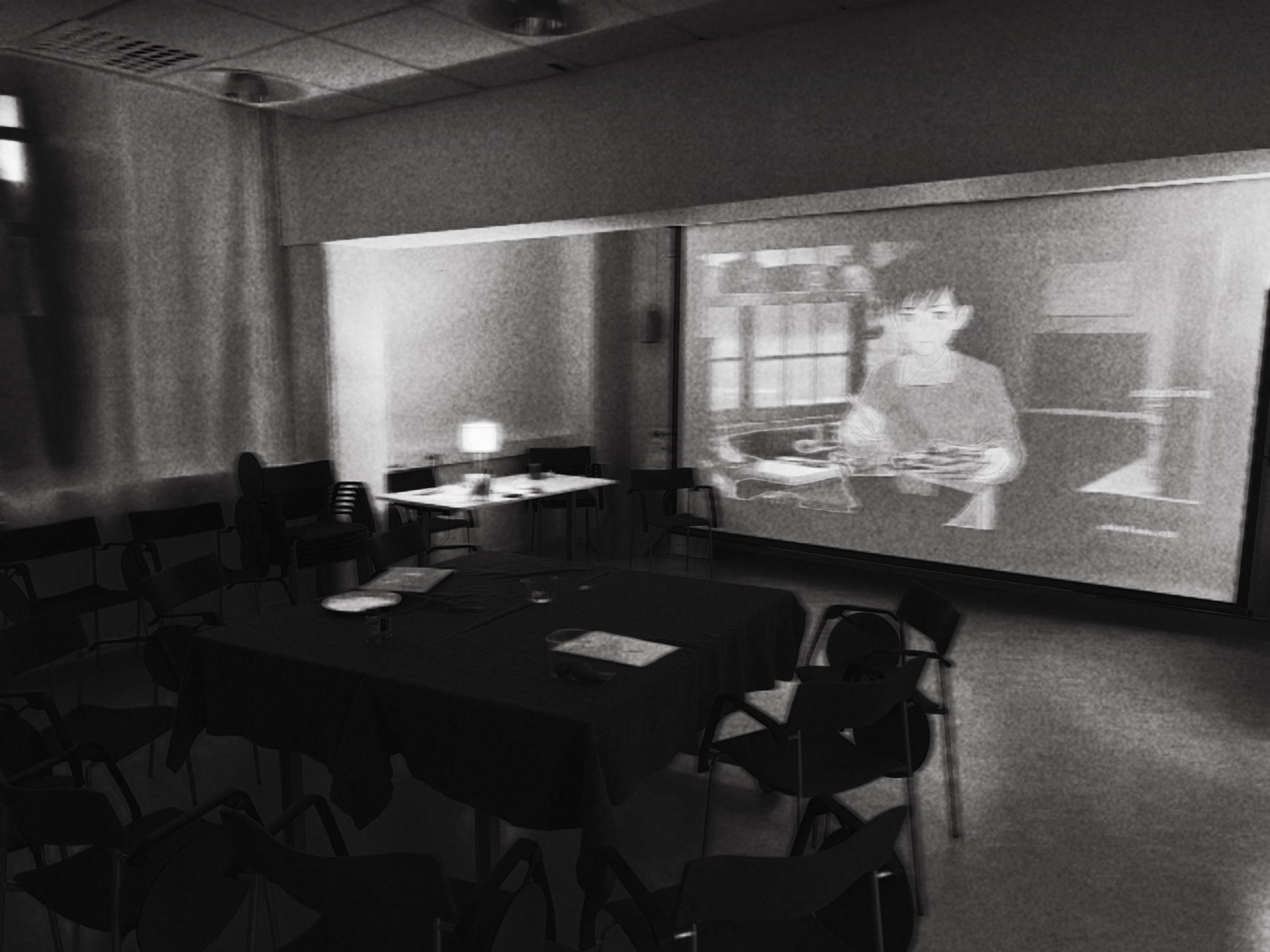
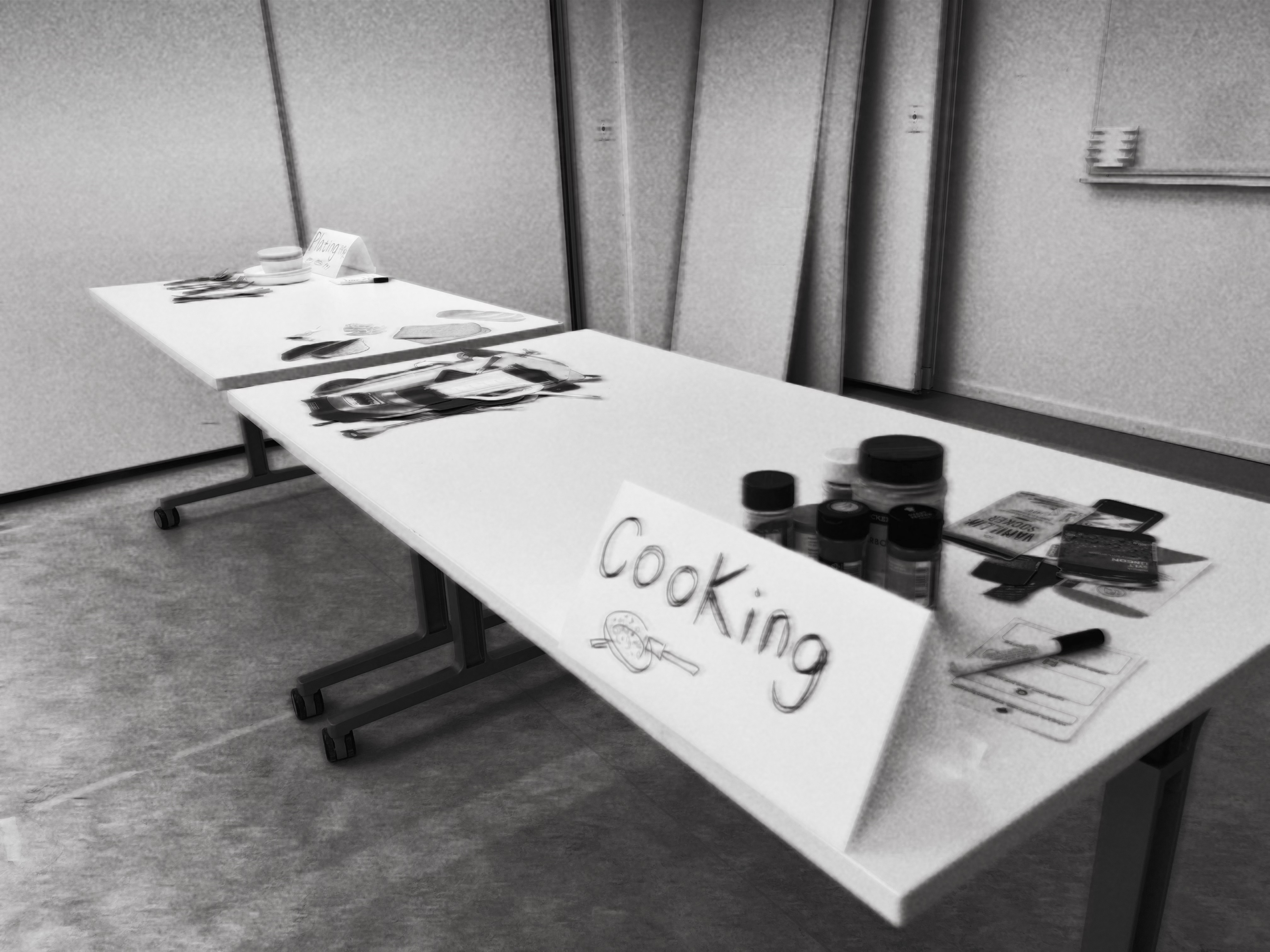
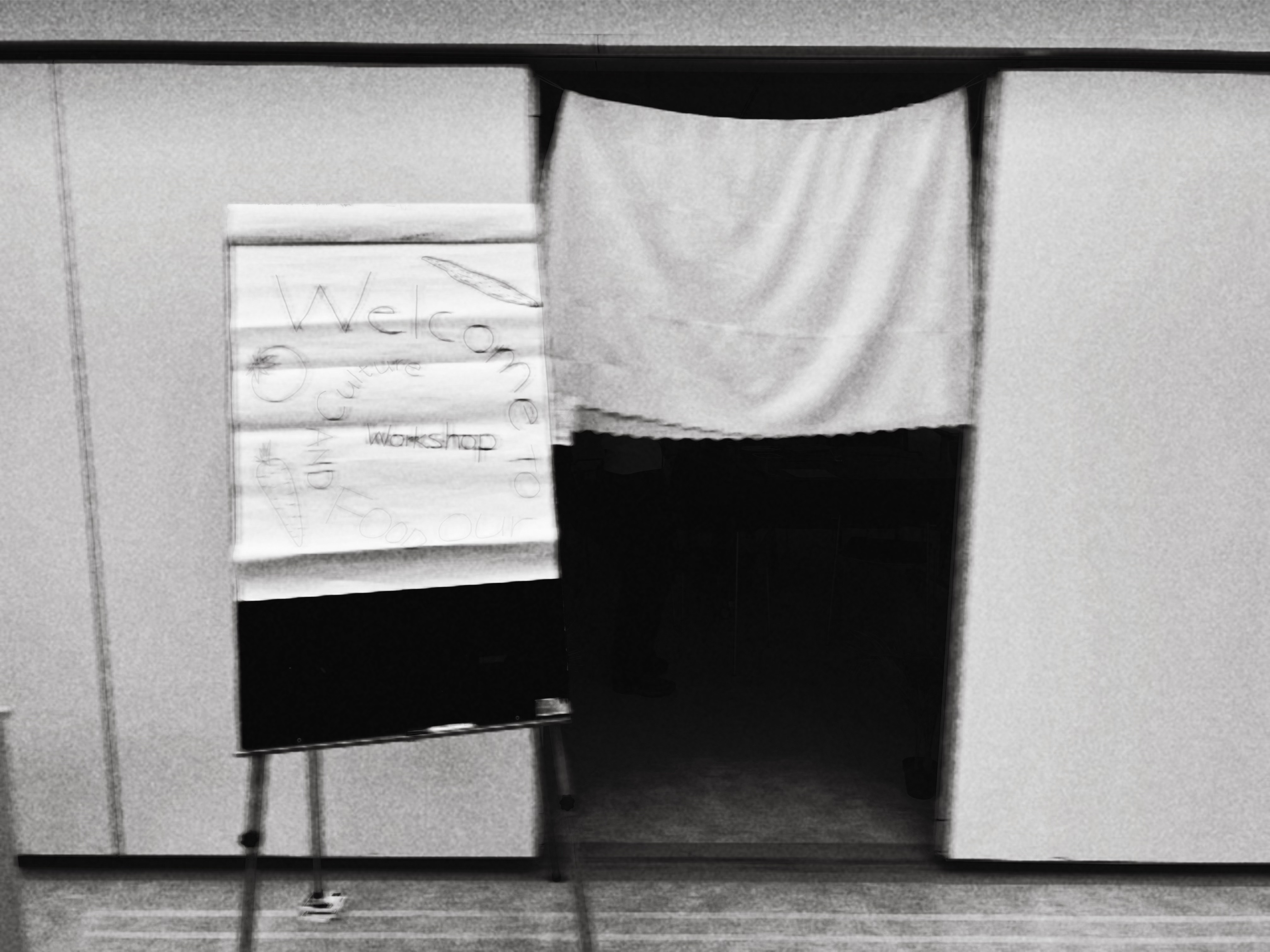
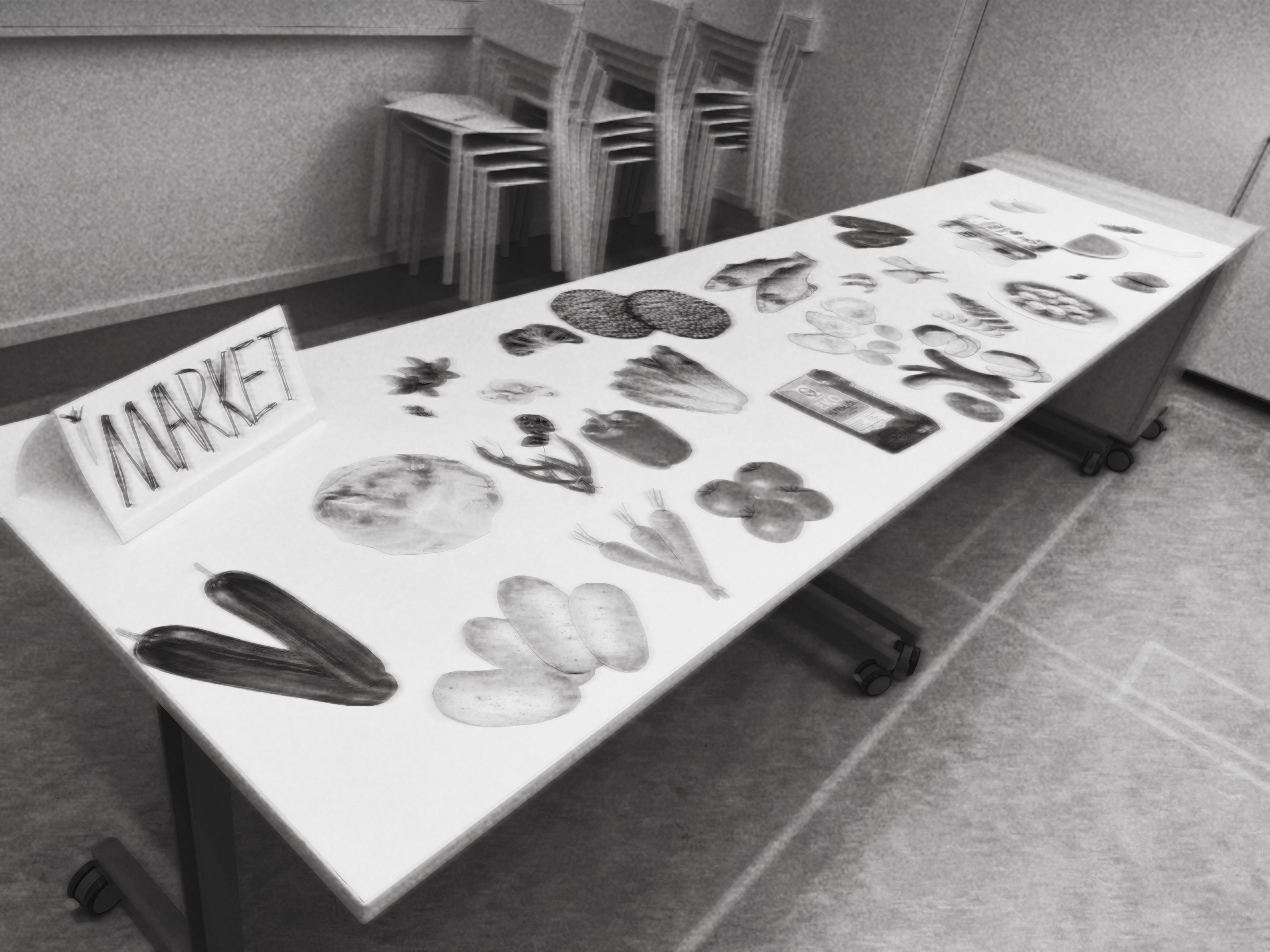
The space became Kitchen (clear, focus on steps) + Restaurant (warm, discussion-led)
When participants gathered in the restaurant to talk about what they had made,
the conversation naturally shifted from food to culture.
In the final discussion, one newly formed hybrid dish triggered curiosity and debate.
① Minced meat moment:
Someone blended beef with watermelon and strawberries and baked it into a patty.
The room started a heated debate.
When a Turkish participant said “we do something similar,”
the discussion shifted to what ingredients, and when it’s eaten.
② Watermelon moment:
A fruit-salad-like dish sparked a lively exchange:
how do you know a watermelon is good?China (and similarly India) taps for sound; Turkey reads other cues.
People found resonance by comparing the smallest habits.
The workshop worked: the conversations were inspiring.
But what happens after this room?
If food is an invisible table,who sets it up —and who decides to sit down?
We realised that a meaningful experience is not enough.Participation itself needs to be designed.
In an improv workshop, we scripted this reality into three scenes:
Act 1 | Invitation
Act 2 | Hesitation
Act 3 | Afterwards
What is it about? Who’s going?

I don’t really know anyone there… and I’m not sure the food will suit me.

That was easier than I thought!!

We’re doing a small cooking session this week.

That’s exactly why it works!
you don’t have to know anyone,
and you can shape the dish yourself.

Come next time :))))

In the final scene, participants said:
once they join once, the next time becomes easier, and they’re willing to bring friends.
This revealed the potential for social sustainability:You need a strong trigger to get the first step.And you need feedback and collection at the end, so the experience can loop and grow.
We facilitated a real workshop
Not Weird At All
Process Flow | Banana Curry Pizza
check Our Toolkit Website ➔
The final deliverable is a toolkit that uses real ingredients to support
a full cycle of making, documenting, and sharing food,
helping participants explore cultural exchange through cooking.
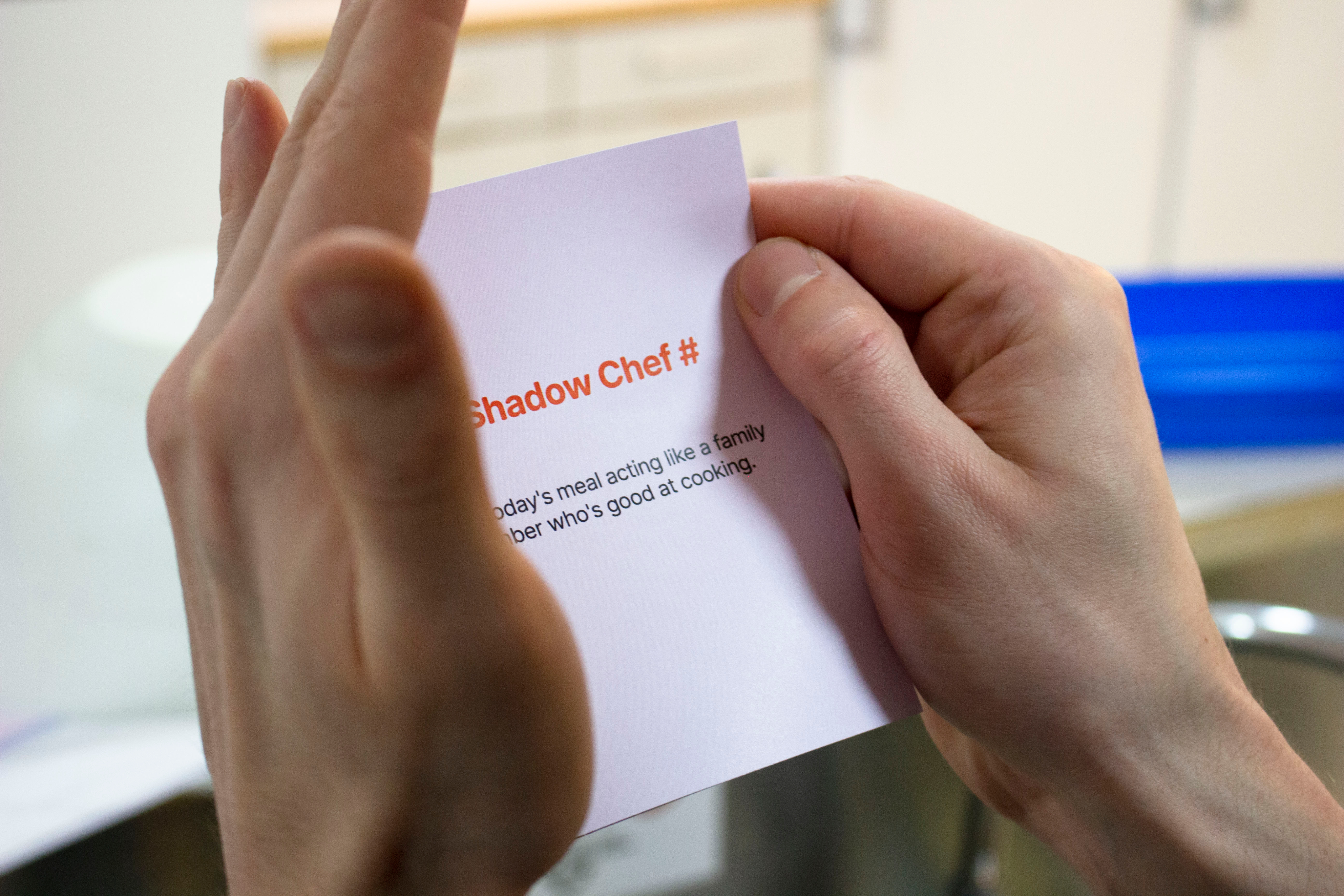
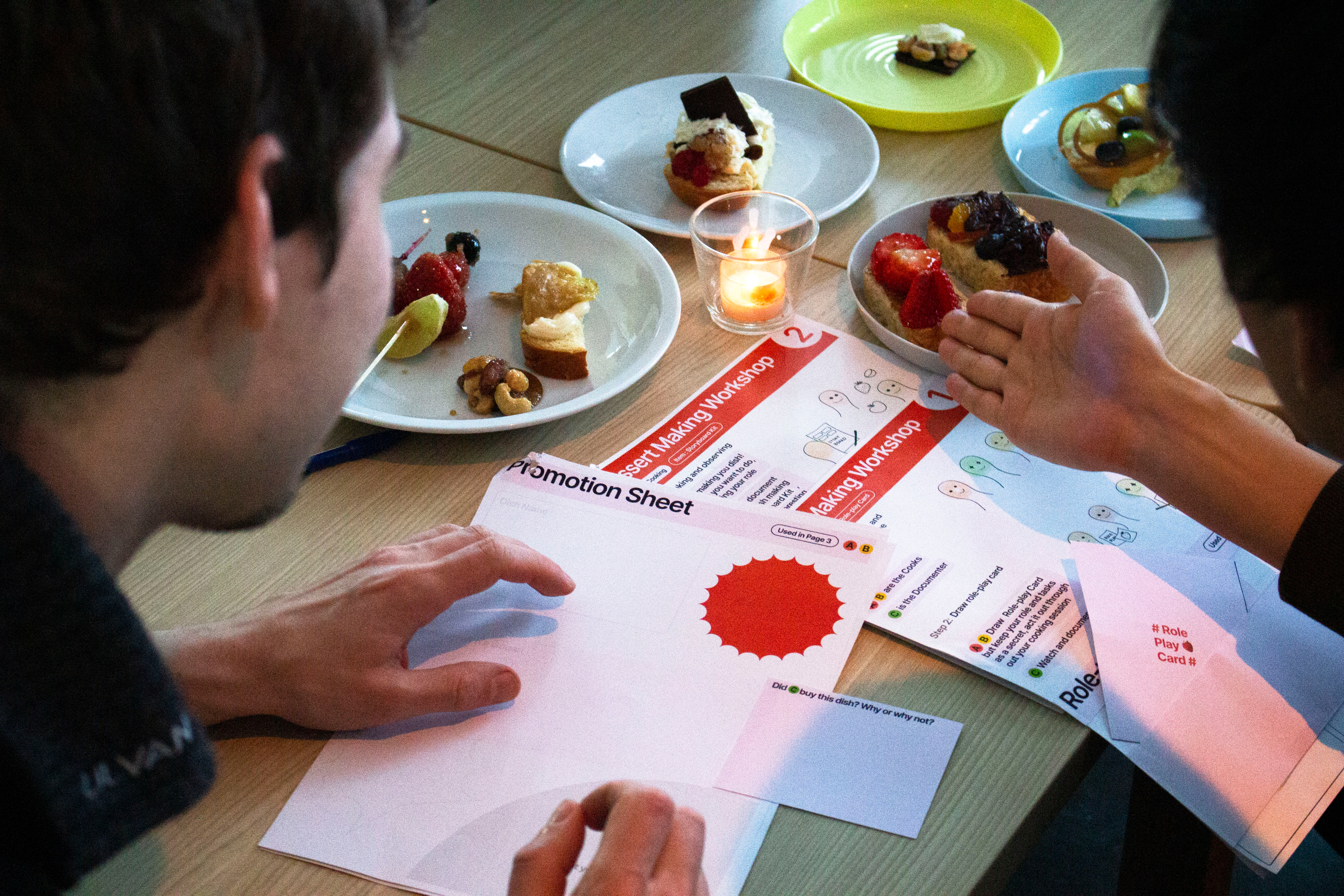
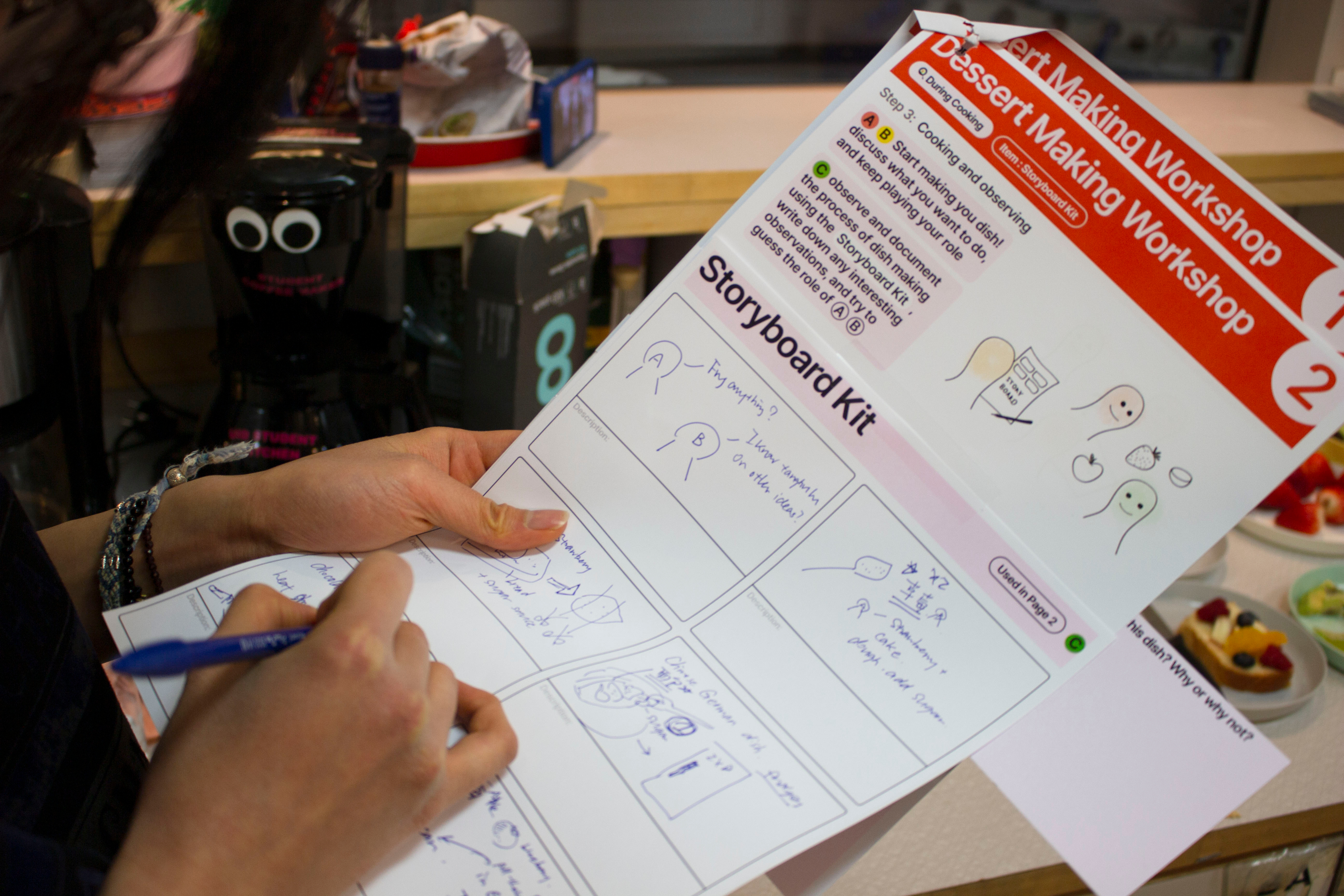
Draw a Card
Chefs pick a food-and-culture task card to guide the cooking.
Cook & Map
Customers document the chef’s process using a storyboard.
Advertise the Dish
Chefs design a poster to promote the new dish.


WARM-UP
ICEBREAKER
CARD DRAWING
TASK-BASED COOKING & MAPPING
ADVERTISING THE DISHES
REVEALING TASKS
ONE-SHOT VIDEO
WORKSHOP INTRO
RESEARCH
INSIGHTS
DOCUMENTING & SHARING


15min
10min
30-60min
20min
10-30min

Outcome: participants don’t just “learn about” other cultures, but prototype cultural hybrids and make their decisions legible to others.
6


Provocation (Task Cards): prompts that trigger role negotiation and cultural recall without prescribing a recipe.
Externalization (Storyboard): captures invisible reasoning (why this ingredient, why that step) and makes it discussable.
Archiving (One-shot video):
consolidates process + rationale into a reusable learning asset for organizers.
Narrativization (Poster):
transforms a dish into a communicable “offer,” encouraging storytelling, naming, and audience awareness.
Key insight: people explain culture more naturally when they have to make decisions together under real constraints (time, taste, texture, tools).
1
2
3
4
5


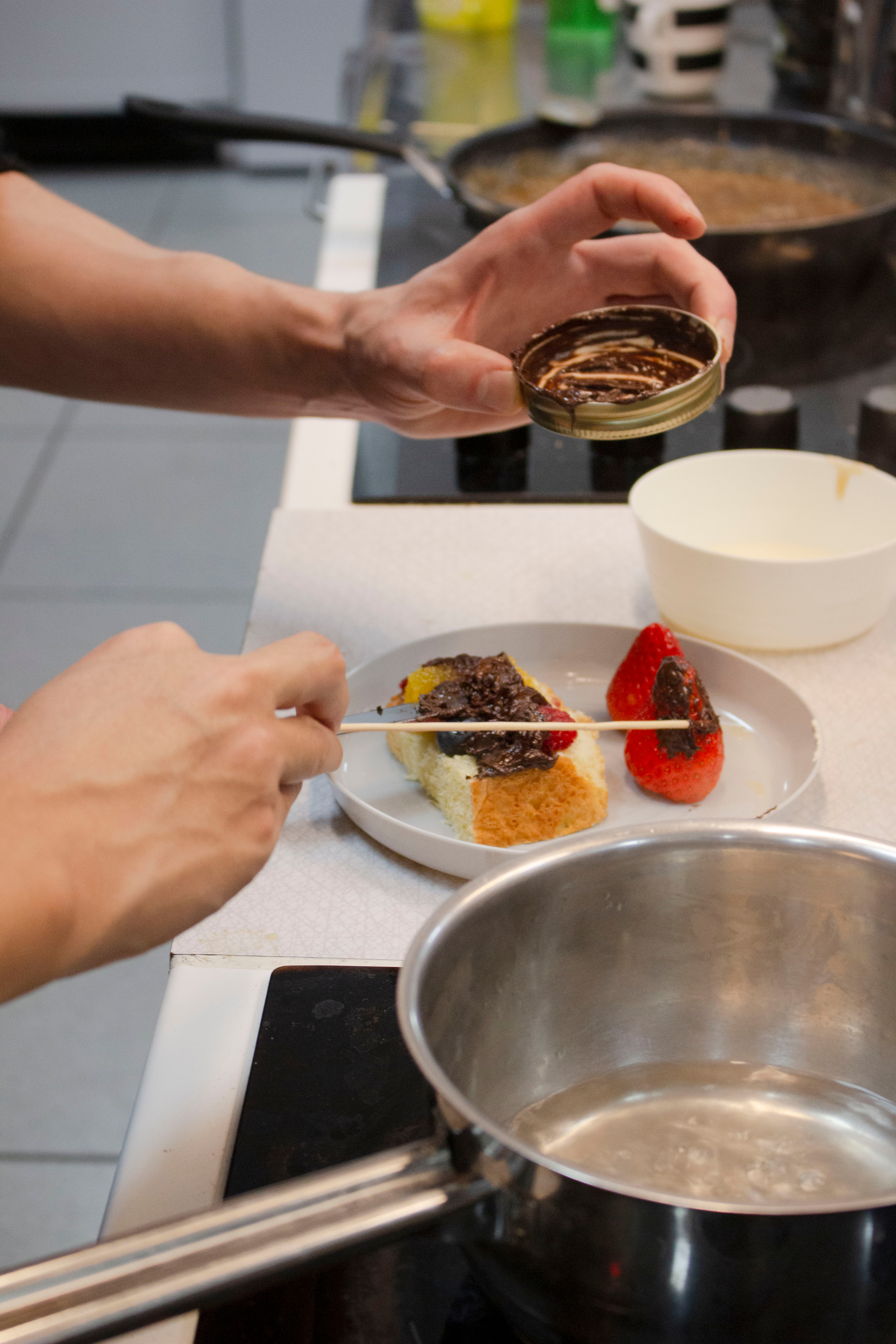
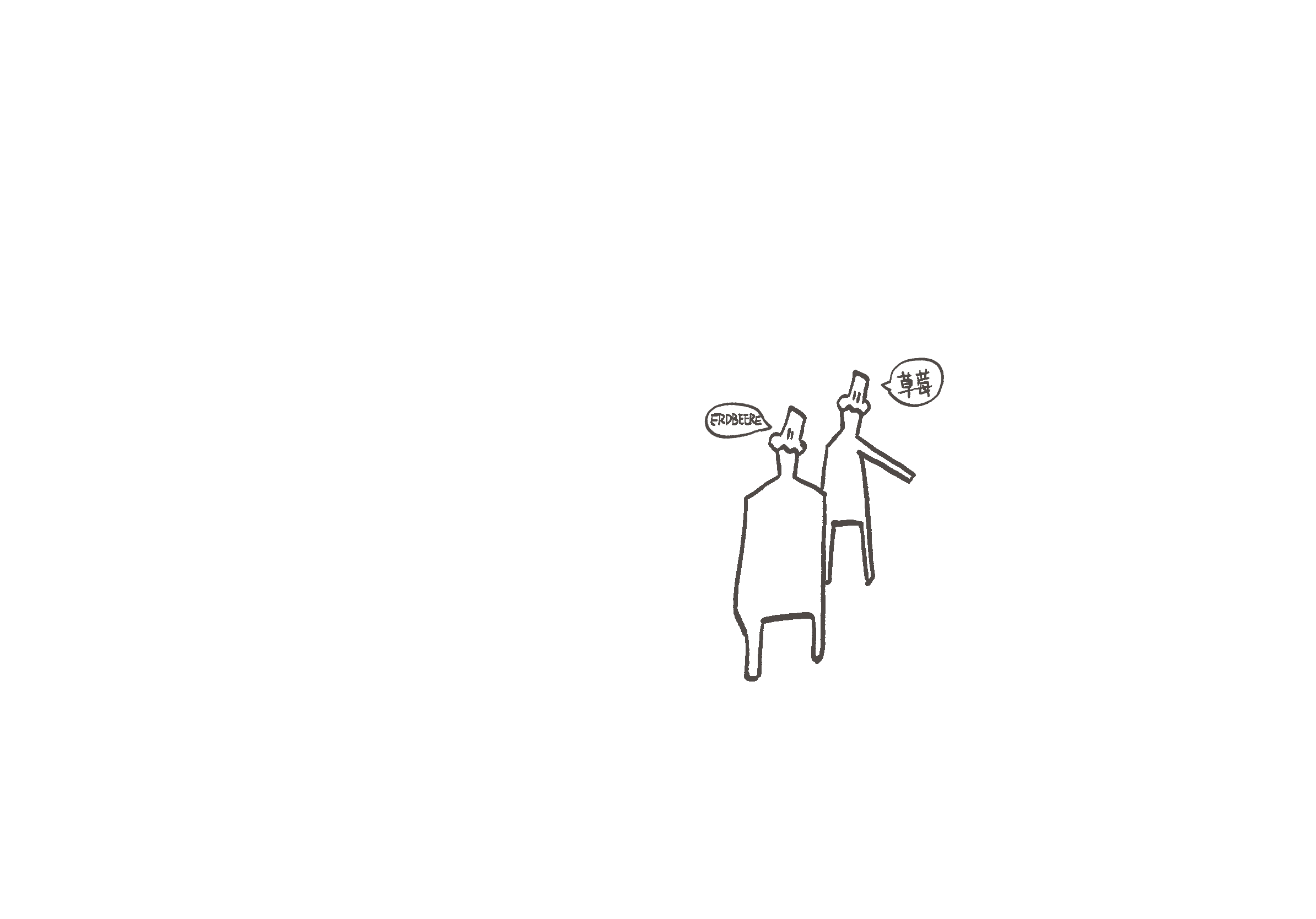
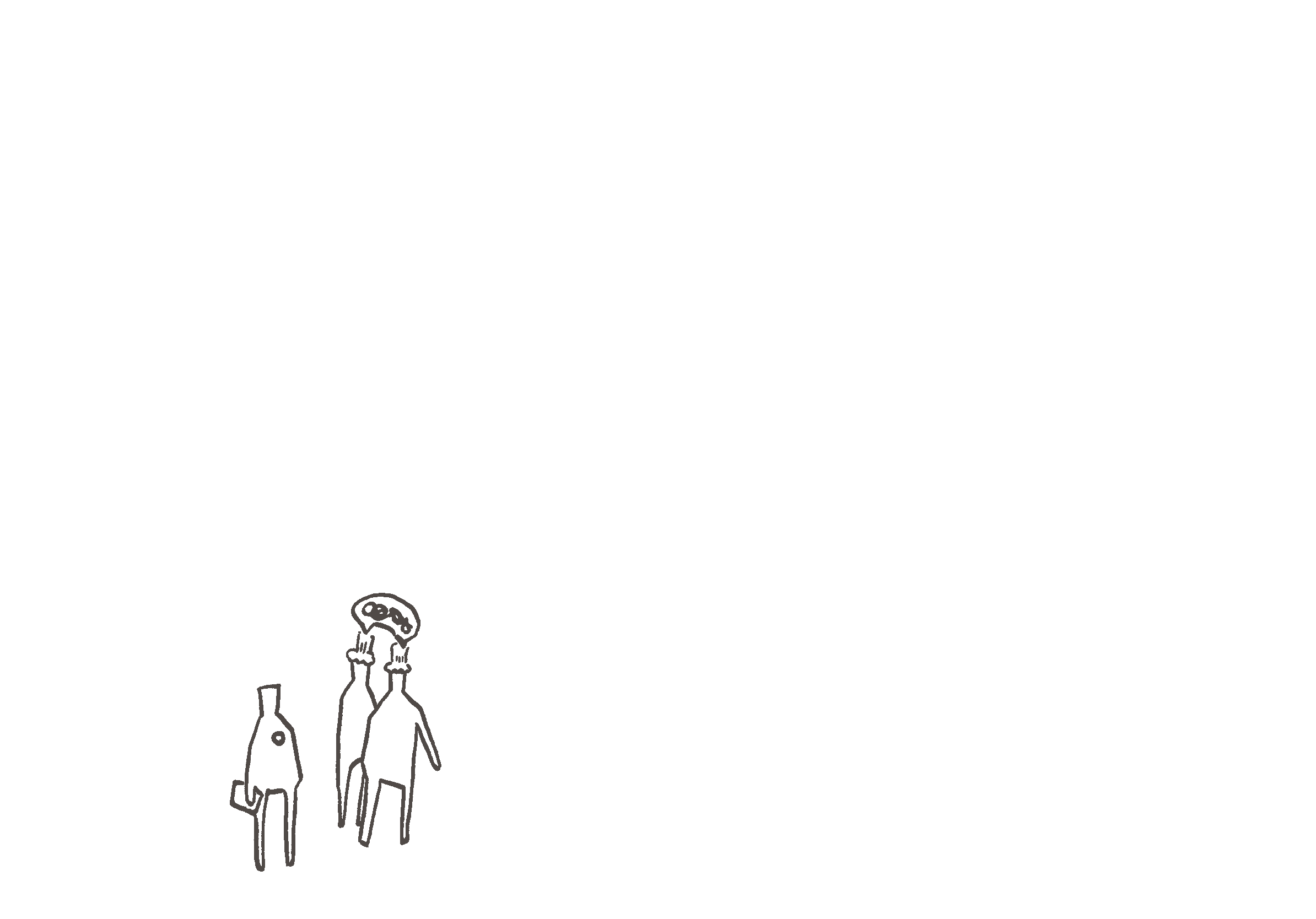
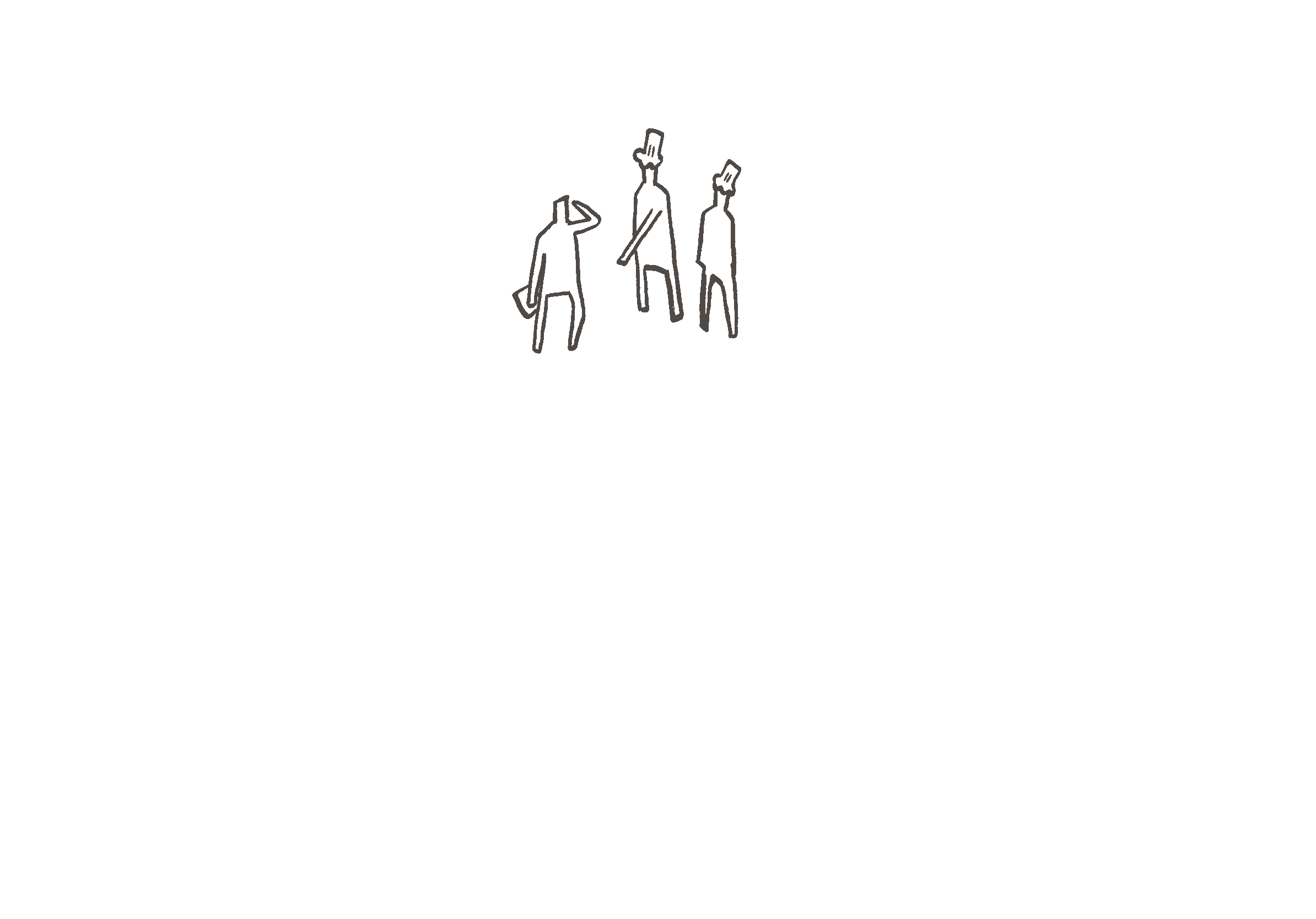
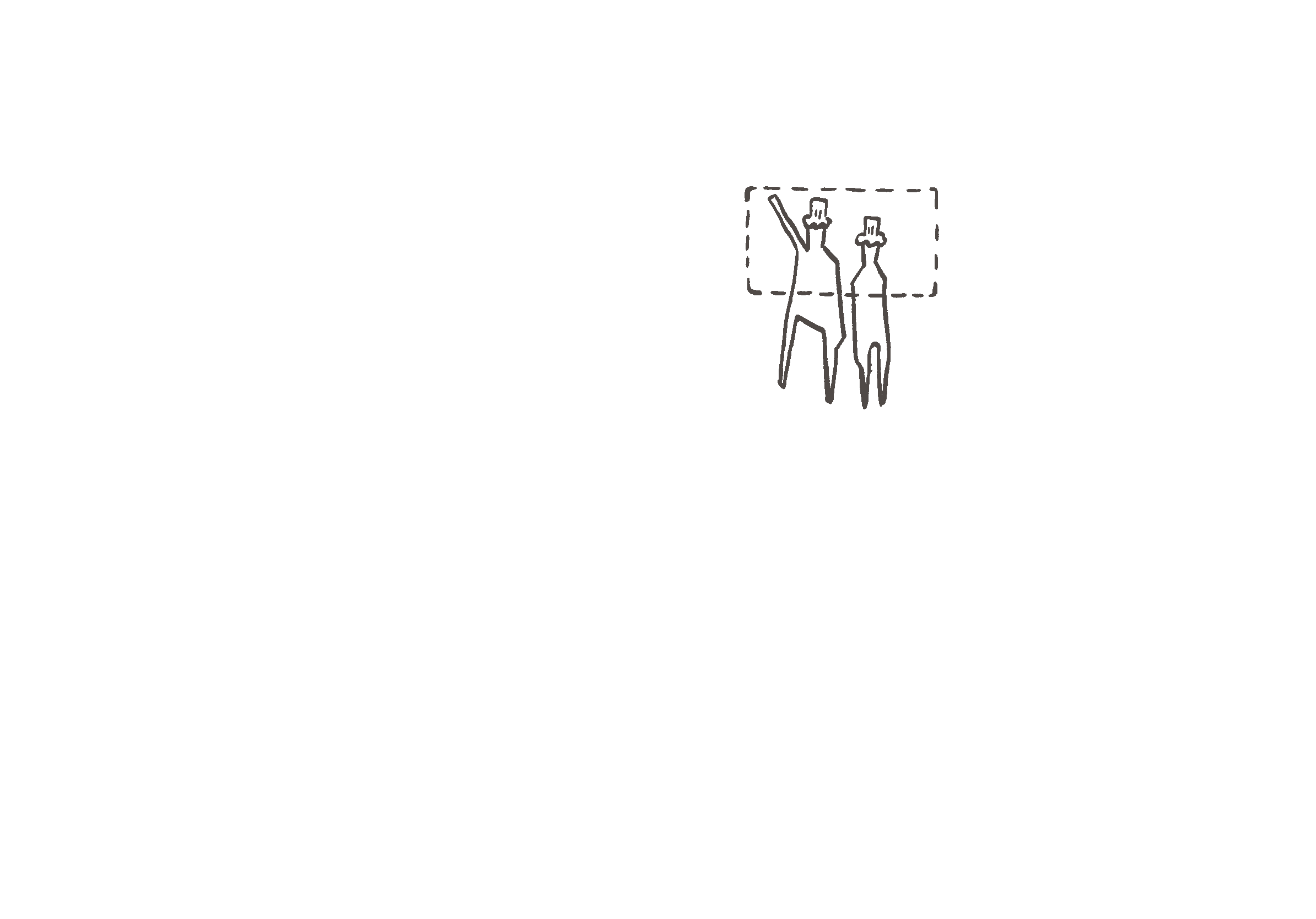

During the process, Zack continuously taught Jeremy how to say “strawberry” in Chinese (草莓), while Jeremy explained how to make German Strawberry Cake (Erdbeerkuchen).
They decided to co-create a dessert that blended elements from both cultures. Sue observed and recorded their actions.
After reading the task card,
Zack and Jeremy cooked together.
Zack and Jeremy acted as the “chefs,”
while Sue documented the process.
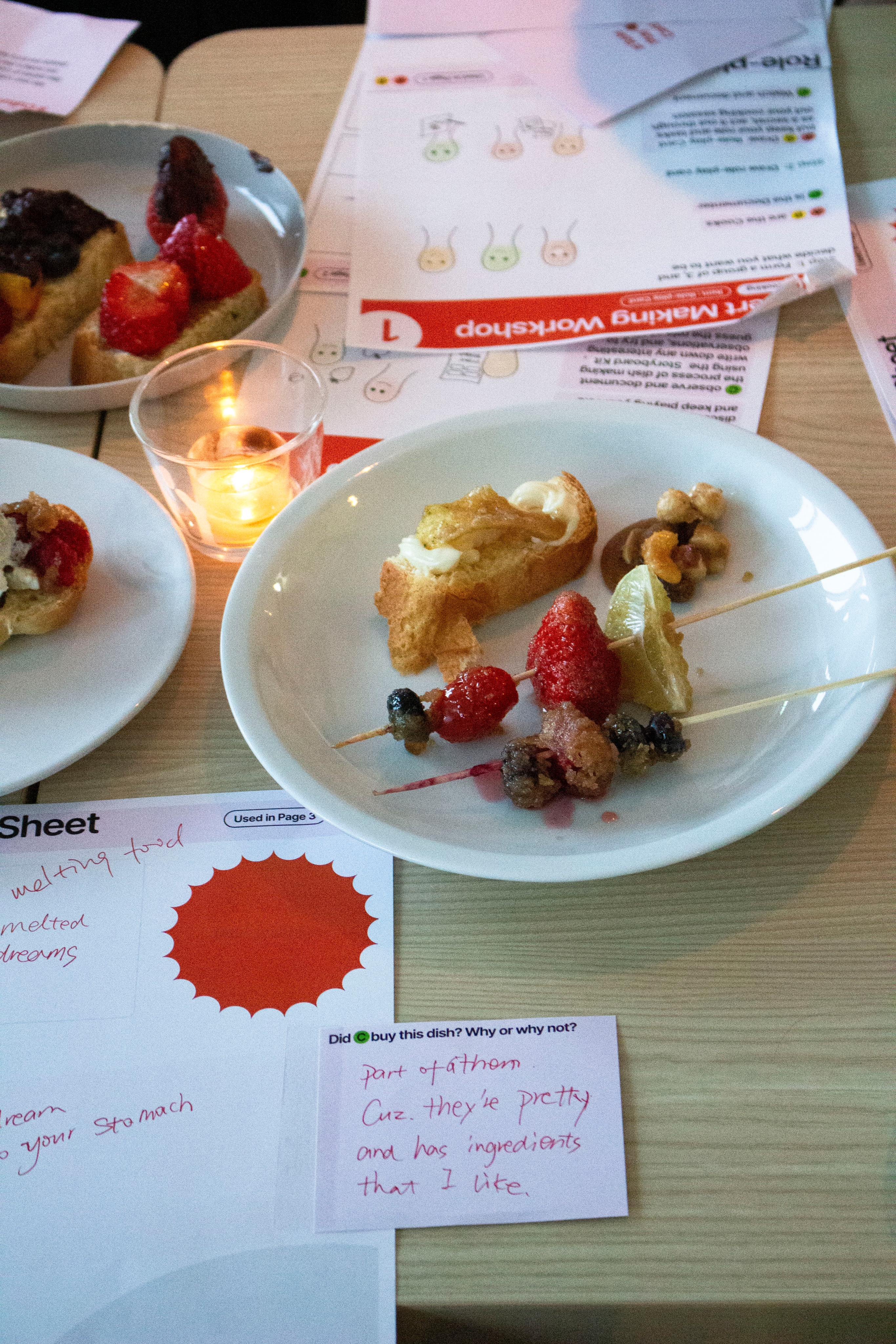
One dish was called “Volcano Strawberry,” blending traditional German and Chinese desserts, reshaping the form of the food and giving it a playful new name.
The group arranged the created dishes together.
Zack and Jeremy made an advertisement and renamed their outcomes.
Later, Sue shared her interpretations. Zack and Jeremy then used Sue’s journey map to reveal when and how they had completed the tasks.
Process Video | Banana Curry Pizza
Returning the “Process” to Participants
Back To The Table
While finalizing the method, we ran into a key challenge:
how to document and consolidate the workshop process.
We wanted documentation to be more than archival:
it should support participants’ own understanding and reflection.
For that reason, we deliberately avoided relying on third-party observation or interpretation,
so that lived experience would not be outsourced again to an external viewpoint.
Inspired by auto-ethnography, we reframed documentation as a collective practice:
participants observe and document one another.
During the workshop,
each person is both an actor and a witness.
Documentation no longer happens outside the activity
but is embedded within it.
This mutual documentation has two effects:
- It continually prompts participants to align on “what we are experiencing,”deepening their understanding of the process;
- It makes everyone part of the process,reducing the asymmetry of being “studied” or “represented.”
Especially when we ask multiple experiences/narratives to be merged,
differences naturally surface:
Conflicts, frictions, and unexpected combinations make outcomes unpredictable;
And it is precisely within this uncertainty that new associations and creative insights are more likely to emerge.
Because the workshop is built entirely on participants’ personal experiences,
we designed high-agency, open-ended activities that
give them ample space to present their own knowledge and stories.
Future Implications / Impact
- The “action before dialogue” structure can be transferred to cross-cultural education, team collaboration, and community integration contexts: by entering a shared situation through hands-on action first, participants can then name and discuss what happened, lowering the language barrier and enabling more genuine mutual understanding.
- By turning the process into reusable, lightweight materials (artefacts of documentation + outcome narratives + video snippets), organizers can build a comparable case library over time, so the method can evolve from “personal experience” into iterable design evidence.
- This approach turns “culture” into actionable choices and outputs, making co-creation more likely to lead to localized innovation: different groups can continuously generate, name, and circulate new hybrid practices and food narratives within a shared framework.

折罗
Main Courses
Co-Act
Banana Curry Pizza
FreedoMOM
More Projects...
Traces of Interaction
Drinks
Art & Craft
My Works
To-do List

折罗
CV

Have you eaten food before?
Any food -- Yes, I mean any.
How does it taste?
Yummm? Ewwww?

Banana Curry Pizza
Group Project
2 Months
Contribution: Insight synthesis | Experience workshop facilitation | Touchpoint/material design | Storytelling
Co-design toolkit
Decentralised design
food design
check Our Toolkit Website ➔
Food is inclusive
Everything Fits
Whether you’re from Alert in Nunavut, Canada, covered in ice and snow,
or Medellín, Colombia, where bananas grow in abundance,
or Istanbul, Türkiye, where mountains and sea meet in a so-called “capital of the world,”or Hong Kong, China, a neon-lit city that never sleeps...
We have all eaten food.
We all have the right to talk about texture, mouthfeel, and taste.This has nothing to do with race, background, language, or life experience.
Food is radically inclusive.
It offers everyone an invisible table.We gather around it:
starting with food, and moving toward everything food brings up.
This is not a joke!
A “Joke”
You might think the title is a joke.But it is not.
It is real, and you can find it in many local pizza shops in Sweden.
Is this a Pizza Crime? ➔
There is no rule in human society that bans bananas or pineapple on pizza.Food naturally allows us to create based on taste, needs, and cultural experience.

low ➔ High

DIVERSITY
Open To Try
Low “Authenticity Policing”
Ann | The Flavour Blender
Wants To Share
Language Barrier
Yvonne | The Shy Food Lovers
Photo Habit
Shareable Moments
Cindy | The Memory Curator
Communal Eating
Compare Habits
Yale | The Food Philosopher
Passionate
Try-New
Brings People Together
Lily | The Culture Explorer
Enjoy Cooking
Emotional Reward
Experience-First
Dacia | The Cook-For-Process Chef
Simple Food
Convenience
Home-Made Explorer
Steve | The Minimalist
Vibe-First
Local-Access
Conversation > Taste
Louis | The Vibe DJ
High Standard
Cautious Recommend
Leana | The Michelin Foodie


Entry 3 | Occasions
Situations turn food into ritual,
the same dish can mean different things
depending on the moment and company.
Entry 2 | Taboos
Boundaries make cultural differences visible.
Entry 1 | Preferences
Preferences are the easiest way in,
people give you concrete details right away.
Back home it’s really hot, so I can handle spicy food pretty well.
Can I dip this in ketchup, or does it have to be basil sauce?
Whenever I’m feeling really down, I’ll make a whole pot of this.


So we asked a design question:
Under this decentered condition with no single correct answer,could cooking itself become a natural ground for inclusive design?And could food be a medium to explore co-design and cross-cultural design in a more concrete way?
Inviting people in
Story Ingredients
Getting people in, and keeping them in
If Food Is A Table
We hosted a food workshop in a rehearsal studio.
We split “cooking” into 3 unrelated steps (3 teams × 3 people),
then assembled the fragments into one dish.
The space became Kitchen (clear, focus on steps) + Restaurant (warm, discussion-led)
When participants gathered in the restaurant to talk about what they had made,
the conversation naturally shifted from food to culture.
In the final discussion, one newly formed hybrid dish triggered curiosity and debate.
① Minced meat moment:
Someone blended beef with watermelon and strawberries and baked it into a patty.
The room started a heated debate.
When a Turkish participant said “we do something similar,”
the discussion shifted to what ingredients, and when it’s eaten.
② Watermelon moment:
A fruit-salad-like dish sparked a lively exchange:
how do you know a watermelon is good?China (and similarly India) taps for sound; Turkey reads other cues.
People found resonance by comparing the smallest habits.
The workshop worked: the conversations were inspiring.
But what happens after this room?
If food is an invisible table,who sets it up —and who decides to sit down?
We realised that a meaningful experience is not enough.Participation itself needs to be designed.
In an improv workshop, we scripted this reality into three scenes:
Act 1 | Invitation
Act 2 | Hesitation
Act 3 | Afterwards
What is it about? Who’s going?

I don’t really know anyone there… and I’m not sure the food will suit me.
That was easier than I thought!!
We’re doing a small cooking session this week.

That’s exactly why it works!
you don’t have to know anyone,
and you can shape the dish yourself.

Come next time :))))
In the final scene, participants said:
once they join once, the next time becomes easier, and they’re willing to bring friends.
This revealed the potential for social sustainability:You need a strong trigger to get the first step.And you need feedback and collection at the end, so the experience can loop and grow.
We facilitated a real workshop
Not Weird At All
Process Flow | Banana Curry Pizza
check Our Toolkit Website ➔
The final deliverable is a toolkit that uses real ingredients to support
a full cycle of making, documenting, and sharing food,
helping participants explore cultural exchange through cooking.
Draw a Card
Chefs pick a food-and-culture task card to guide the cooking.
Cook & Map
Customers document the chef’s process using a storyboard.
Advertise the Dish
Chefs design a poster to promote the new dish.





WARM-UP
ICEBREAKER
CARD DRAWING
TASK-BASED COOKING & MAPPING
ADVERTISING THE DISHES
REVEALING TASKS
ONE-SHOT VIDEO
WORKSHOP INTRO
RESEARCH
INSIGHTS
DOCUMENTING & SHARING


15min
10min
30-60min
20min
10-30min

Outcome: participants don’t just “learn about” other cultures, but prototype cultural hybrids and make their decisions legible to others.
6


Provocation (Task Cards): prompts that trigger role negotiation and cultural recall without prescribing a recipe.
Externalization (Storyboard): captures invisible reasoning (why this ingredient, why that step) and makes it discussable.
Archiving (One-shot video):
consolidates process + rationale into a reusable learning asset for organizers.
Narrativization (Poster):
transforms a dish into a communicable “offer,” encouraging storytelling, naming, and audience awareness.
Key insight: people explain culture more naturally when they have to make decisions together under real constraints (time, taste, texture, tools).
1
2
3
4
5


During the process, Zack continuously taught Jeremy how to say “strawberry” in Chinese (草莓), while Jeremy explained how to make German Strawberry Cake (Erdbeerkuchen).
They decided to co-create a dessert that blended elements from both cultures. Sue observed and recorded their actions.
After reading the task card,
Zack and Jeremy cooked together.
Zack and Jeremy acted as the “chefs,”
while Sue documented the process.
One dish was called “Volcano Strawberry,” blending traditional German and Chinese desserts, reshaping the form of the food and giving it a playful new name.
The group arranged the created dishes together.
Zack and Jeremy made an advertisement and renamed their outcomes.
Later, Sue shared her interpretations. Zack and Jeremy then used Sue’s journey map to reveal when and how they had completed the tasks.
Process Video | Banana Curry Pizza
Returning the “Process” to Participants
Back To The Table
While finalizing the method, we ran into a key challenge:
how to document and consolidate the workshop process.
We wanted documentation to be more than archival:
it should support participants’ own understanding and reflection.
For that reason, we deliberately avoided relying on third-party observation or interpretation,
so that lived experience would not be outsourced again to an external viewpoint.
Inspired by auto-ethnography, we reframed documentation as a collective practice:
participants observe and document one another.
During the workshop,
each person is both an actor and a witness.
Documentation no longer happens outside the activity
but is embedded within it.
This mutual documentation has two effects:
- It continually prompts participants to align on “what we are experiencing,”deepening their understanding of the process;
- It makes everyone part of the process,reducing the asymmetry of being “studied” or “represented.”
Especially when we ask multiple experiences/narratives to be merged,
differences naturally surface:
Conflicts, frictions, and unexpected combinations make outcomes unpredictable;
And it is precisely within this uncertainty that new associations and creative insights are more likely to emerge.
Because the workshop is built entirely on participants’ personal experiences,
we designed high-agency, open-ended activities that
give them ample space to present their own knowledge and stories.
Future Implications / Impact
- The “action before dialogue” structure can be transferred to cross-cultural education, team collaboration, and community integration contexts: by entering a shared situation through hands-on action first, participants can then name and discuss what happened, lowering the language barrier and enabling more genuine mutual understanding.
- By turning the process into reusable, lightweight materials (artefacts of documentation + outcome narratives + video snippets), organizers can build a comparable case library over time, so the method can evolve from “personal experience” into iterable design evidence.
- This approach turns “culture” into actionable choices and outputs, making co-creation more likely to lead to localized innovation: different groups can continuously generate, name, and circulate new hybrid practices and food narratives within a shared framework.

折罗
Main Courses
Traces of Interaction
Co-Act
Banana Curry Pizza
FreedoMOM
More Projects...
Drinks
Art & Craft
My Works
To-do List

折罗
CV

Have you eaten food before?
Any food -- Yes, I mean any.
How does it taste?
Yummm? Ewwww?

Banana Curry Pizza
Group Project
2 Months
Contribution: Insight synthesis | Experience workshop facilitation | Touchpoint/material design | Storytelling
Co-design toolkit
Decentralised design
food design
check Our Toolkit Website ➔
Food is inclusive
Everything Fits
Whether you’re from Alert in Nunavut, Canada, covered in ice and snow,
or Medellín, Colombia, where bananas grow in abundance,
or Istanbul, Türkiye, where mountains and sea meet in a so-called “capital of the world,”or Hong Kong, China, a neon-lit city that never sleeps...
We have all eaten food.
We all have the right to talk about texture, mouthfeel, and taste.This has nothing to do with race, background, language, or life experience.
Food is radically inclusive.
It offers everyone an invisible table.We gather around it:
starting with food, and moving toward everything food brings up.
This is not a joke!
A “Joke”
You might think the title is a joke.But it is not.
It is real, and you can find it in many local pizza shops in Sweden.
Is this a Pizza Crime? ➔
There is no rule in human society that bans bananas or pineapple on pizza.Food naturally allows us to create based on taste, needs, and cultural experience.

low ➔ High

DIVERSITY
Open To Try
Low “Authenticity Policing”
Ann | The Flavour Blender
Wants To Share
Language Barrier
Yvonne | The Shy Food Lovers
Photo Habit
Shareable Moments
Cindy | The Memory Curator
Communal Eating
Compare Habits
Yale | The Food Philosopher
Passionate
Try-New
Brings People Together
Lily | The Culture Explorer
Enjoy Cooking
Emotional Reward
Experience-First
Dacia | The Cook-For-Process Chef
Simple Food
Convenience
Home-Made Explorer
Steve | The Minimalist
Vibe-First
Local-Access
Conversation > Taste
Louis | The Vibe DJ
High Standard
Cautious Recommend
Leana | The Michelin Foodie


Entry 3 | Occasions
Situations turn food into ritual,
the same dish can mean different things
depending on the moment and company.
Entry 2 | Taboos
Boundaries make cultural differences visible.
Entry 1 | Preferences
Preferences are the easiest way in,
people give you concrete details right away.
Back home it’s really hot, so I can handle spicy food pretty well.
Can I dip this in ketchup, or does it have to be basil sauce?
Whenever I’m feeling really down, I’ll make a whole pot of this.


So we asked a design question:
Under this decentered condition with no single correct answer,could cooking itself become a natural ground for inclusive design?And could food be a medium to explore co-design and cross-cultural design in a more concrete way?
Inviting people in
Story Ingredients
Getting people in, and keeping them in
If Food Is A Table
We hosted a food workshop in a rehearsal studio.
We split “cooking” into 3 unrelated steps (3 teams × 3 people),
then assembled the fragments into one dish.
The space became Kitchen (clear, focus on steps) + Restaurant (warm, discussion-led)
When participants gathered in the restaurant to talk about what they had made,
the conversation naturally shifted from food to culture.
In the final discussion, one newly formed hybrid dish triggered curiosity and debate.
① Minced meat moment:
Someone blended beef with watermelon and strawberries and baked it into a patty.
The room started a heated debate.
When a Turkish participant said “we do something similar,”
the discussion shifted to what ingredients, and when it’s eaten.
② Watermelon moment:
A fruit-salad-like dish sparked a lively exchange:
how do you know a watermelon is good?China (and similarly India) taps for sound; Turkey reads other cues.
People found resonance by comparing the smallest habits.
The workshop worked: the conversations were inspiring.
But what happens after this room?
If food is an invisible table,who sets it up —and who decides to sit down?
We realised that a meaningful experience is not enough.Participation itself needs to be designed.
In an improv workshop, we scripted this reality into three scenes:
Act 1 | Invitation
Act 2 | Hesitation
Act 3 | Afterwards
What is it about? Who’s going?

I don’t really know anyone there… and I’m not sure the food will suit me.
That was easier than I thought!!
We’re doing a small cooking session this week.

That’s exactly why it works!
you don’t have to know anyone,
and you can shape the dish yourself.
Come next time :))))
In the final scene, participants said:
once they join once, the next time becomes easier, and they’re willing to bring friends.
This revealed the potential for social sustainability:You need a strong trigger to get the first step.And you need feedback and collection at the end, so the experience can loop and grow.
We facilitated a real workshop
Not Weird At All
Process Flow | Banana Curry Pizza
The final deliverable is a toolkit that uses real ingredients to support
a full cycle of making, documenting, and sharing food,
helping participants explore cultural exchange through cooking.
Draw a Card
Chefs pick a food-and-culture task card to guide the cooking.
Cook & Map
Customers document the chef’s process using a storyboard.
Advertise the Dish
Chefs design a poster to promote the new dish.




WARM-UP
ICEBREAKER
CARD DRAWING
TASK-BASED COOKING & MAPPING
ADVERTISING THE DISHES
REVEALING TASKS
ONE-SHOT VIDEO
WORKSHOP INTRO
RESEARCH
INSIGHTS
DOCUMENTING & SHARING


15min
10min
30-60min
20min
10-30min

Outcome: participants don’t just “learn about” other cultures, but prototype cultural hybrids and make their decisions legible to others.
6


Provocation (Task Cards): prompts that trigger role negotiation and cultural recall without prescribing a recipe.
Externalization (Storyboard): captures invisible reasoning (why this ingredient, why that step) and makes it discussable.
Archiving (One-shot video):
consolidates process + rationale into a reusable learning asset for organizers.
Narrativization (Poster):
transforms a dish into a communicable “offer,” encouraging storytelling, naming, and audience awareness.
Key insight: people explain culture more naturally when they have to make decisions together under real constraints (time, taste, texture, tools).
1
2
3
4
5


During the process, Zack continuously taught Jeremy how to say “strawberry” in Chinese (草莓), while Jeremy explained how to make German Strawberry Cake (Erdbeerkuchen).
They decided to co-create a dessert that blended elements from both cultures. Sue observed and recorded their actions.
After reading the task card,
Zack and Jeremy cooked together.
Zack and Jeremy acted as the “chefs,”
while Sue documented the process.
One dish was called “Volcano Strawberry,” blending traditional German and Chinese desserts, reshaping the form of the food and giving it a playful new name.
The group arranged the created dishes together.
Zack and Jeremy made an advertisement and renamed their outcomes.
Later, Sue shared her interpretations. Zack and Jeremy then used Sue’s journey map to reveal when and how they had completed the tasks.
Process Video | Banana Curry Pizza
Returning the “Process” to Participants
Back To The Table
While finalizing the method, we ran into a key challenge:
how to document and consolidate the workshop process.
We wanted documentation to be more than archival:
it should support participants’ own understanding and reflection.
For that reason, we deliberately avoided relying on third-party observation or interpretation,
so that lived experience would not be outsourced again to an external viewpoint.
Inspired by auto-ethnography, we reframed documentation as a collective practice:
participants observe and document one another.
During the workshop,
each person is both an actor and a witness.
Documentation no longer happens outside the activity
but is embedded within it.
This mutual documentation has two effects:
- It continually prompts participants to align on “what we are experiencing,”deepening their understanding of the process;
- It makes everyone part of the process,reducing the asymmetry of being “studied” or “represented.”
Because the workshop is built entirely on participants’ personal experiences,
we designed high-agency, open-ended activities that
give them ample space to present their own knowledge and stories.
Especially when we ask multiple experiences/narratives to be merged,
differences naturally surface:
Conflicts, frictions, and unexpected combinations make outcomes unpredictable;
And it is precisely within this uncertainty that new associations and creative insights are more likely to emerge.
Future Implications / Impact
- The “action before dialogue” structure can be transferred to cross-cultural education, team collaboration, and community integration contexts: by entering a shared situation through hands-on action first, participants can then name and discuss what happened, lowering the language barrier and enabling more genuine mutual understanding.
- By turning the process into reusable, lightweight materials (artefacts of documentation + outcome narratives + video snippets), organizers can build a comparable case library over time, so the method can evolve from “personal experience” into iterable design evidence.
- This approach turns “culture” into actionable choices and outputs, making co-creation more likely to lead to localized innovation: different groups can continuously generate, name, and circulate new hybrid practices and food narratives within a shared framework.

折罗
Main Courses
Traces of Interaction
Co-Act
Banana Curry Pizza
FreedoMOM
More Projects...
Drinks
Art & Craft
My Works
To-do List
